Treated pine retaining wall sleepers in Pakenham: H4 or H5?
Treated pine sleepers come in two ratings for use in the ground, H4 and H5. Which one belongs in your wall depends on the load it carries and how wet the ground stays. This guide explains the difference and what to ask before you accept a quote.
For a low garden bed wall, H4 pine is sold and used. Where the wall holds back soil that a path, lawn, shed or fence depends on, the timber industry guide says H5 or a Class 1 durable hardwood is required. Ask your builder which rating is in the quote, in writing.
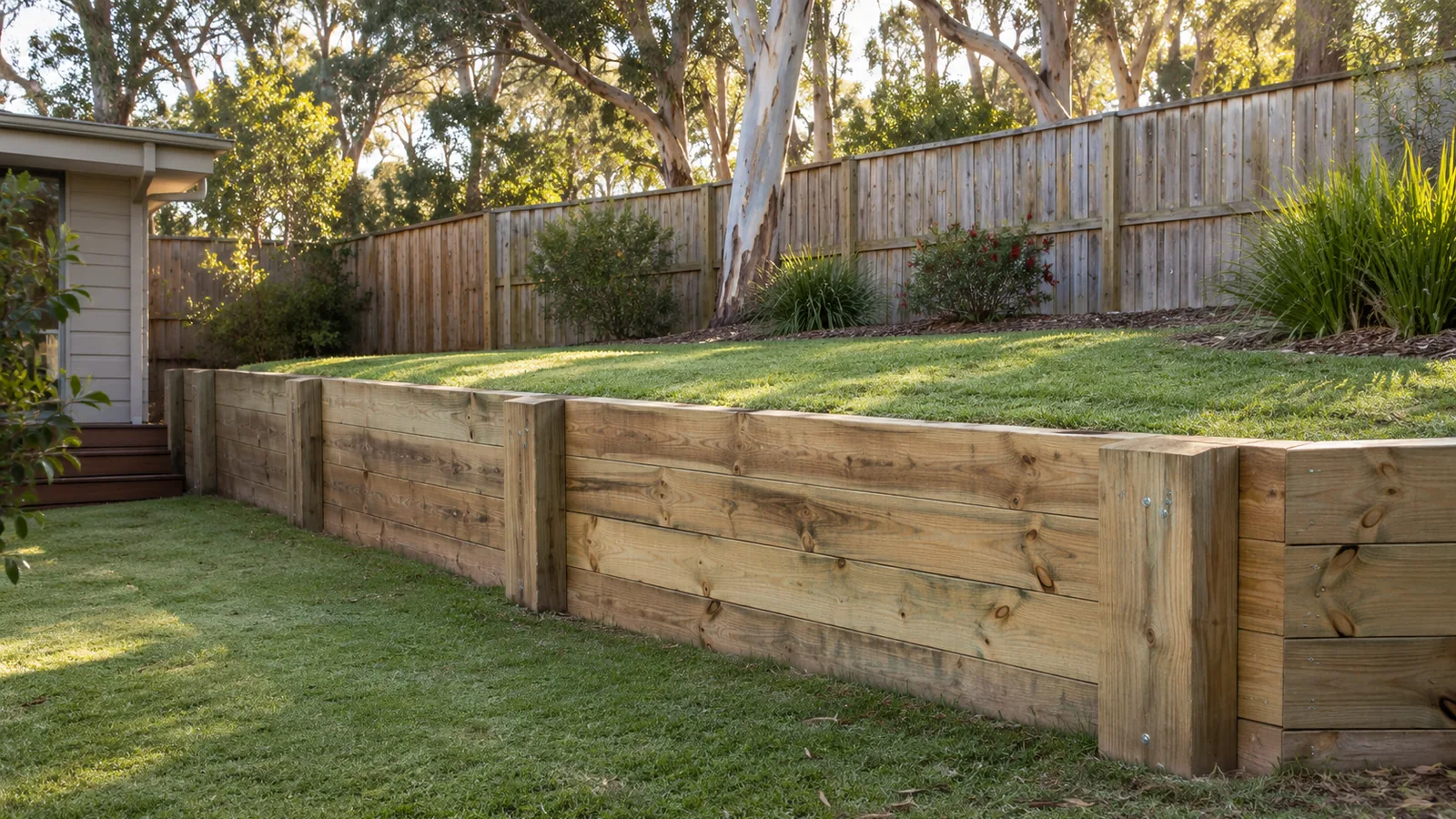
What do H4 and H5 mean on a sleeper?
The H number is a hazard class. It tells you how harsh a spot the timber was treated for. A higher number means a wetter, riskier place and a stronger preservative treatment.
| Class | Meant for | Retaining wall note |
|---|---|---|
| H4 | In the ground or damp, non-critical use | Low garden walls |
| H5 | In the ground or fresh water, critical structural use | Walls that hold real load |
The difference is the word critical. A sleeper holding back a garden bed that can fail without hurting anyone is one thing. A sleeper holding back the ground under a driveway or a fence line is another.
Which rating should my wall use?
Match the rating to what sits behind and above the wall.
- Garden bed edge: soil only, plants on top, nothing heavy nearby. H4 is the common choice.
- Lawn, path or play area above: people walk and kids play on the soil you are holding. Ask for H5.
- Driveway, shed, tank or fence above: extra load pushes on the wall. Ask for H5 or a hardwood, and expect the design to need an engineer. Our fence above a retaining wall guide covers the fence side.
- Close to a boundary: a failure lands on someone else. Treat it as structural.
If you are unsure which row you are in, assume the stricter one. The sleepers are a small part of the job, and the labour to replace a failed wall is the larger cost.
Send us the height, the length and what sits above the wall. We will state the timber class in the written quote so you can compare it line by line.
Ask for a written quote ☎ Talk it through on (03) 9022 6418How long does a treated pine wall last?
No honest builder can give one number. Life depends on the rating, how wet the sleepers stay, how well the water behind the wall is moved out, and how the cut ends were treated. Clay holds water longer than sand, so a wall on a clay block usually sits wetter.
The way to improve the odds is drainage. A wall with a drain pipe, clean stone and filter cloth behind it keeps water away from the timber. Our retaining wall drainage page shows what goes behind the wall. For a long view of both materials, read the timber versus concrete sleeper comparison.
What should I ask a builder before I accept a pine wall quote?
- Which hazard class are the sleepers and the posts, H4 or H5?
- Is the quote for pine or hardwood, and can I see that written down?
- What drainage sits behind the wall and where does the water go?
- How are the sleeper ends treated after they are cut to length?
- Will an engineer design the wall, and is a building permit needed?
- Is the builder registered, and can I check it with the Building and Plumbing Commission?
The permit question matters. In Victoria a retaining wall more than 1 metre high needs a building permit, and a lower wall can still need one when it protects a neighbouring property. Read our Cardinia Shire permits page for the local detail.
What should I check when the sleepers arrive?
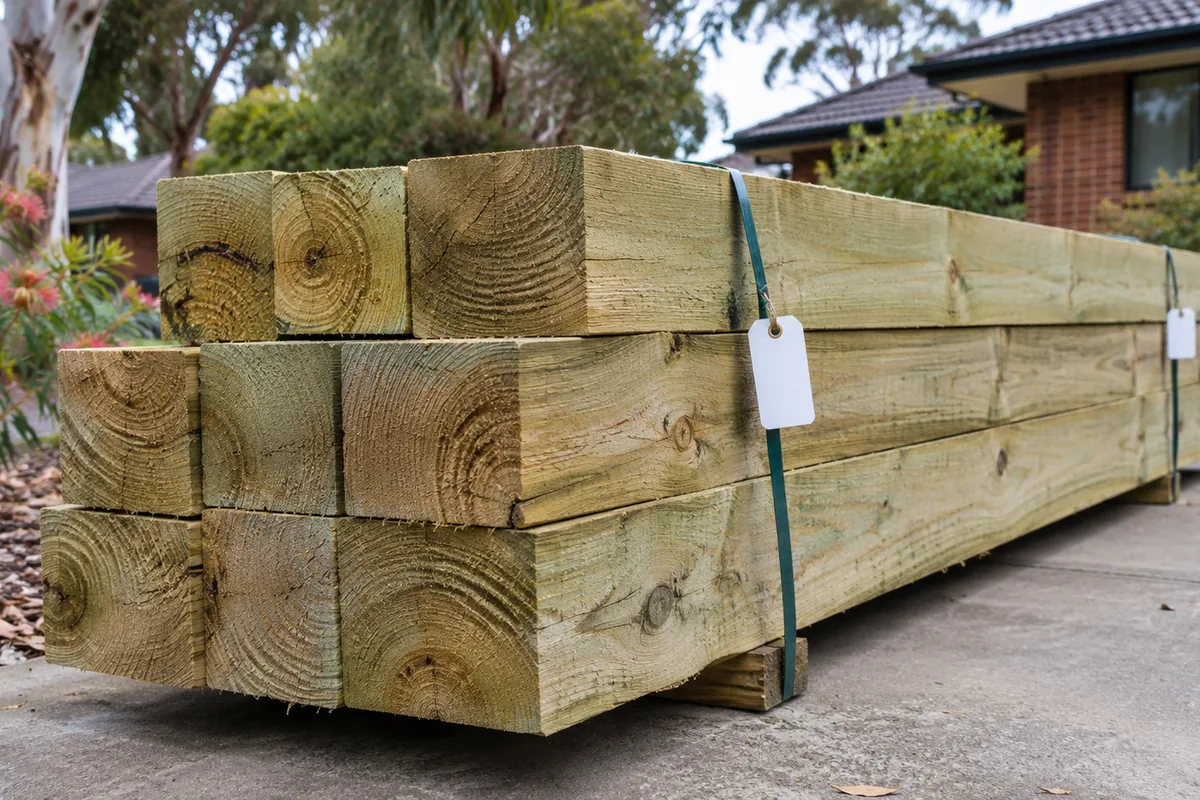
- The hazard class mark or tag on the sleepers matches the docket and the quote.
- The sleeper size matches what was priced. Sleepers are commonly sold about 200 mm high and 75 or 100 mm thick, so a mix-up changes the wall.
- Boards are straight, not split through, and stacked off the ground.
- The count covers the height of the wall. A wall 1.2 metres high needs six rows of 200 mm sleepers, plus the part buried below ground.
Take photos of the marks before anything is cut. If a wall needs a reopened quote later, those photos settle the question quickly. A companion list of what else to order is in our retaining wall materials checklist.
Where do pine walls fit in Pakenham, Officer and Berwick?
Pine suits garden terraces, low raised beds and tidy edges where cost matters and the wall is short. Taller walls and walls near a driveway are usually better suited to concrete sleepers or masonry. See our service pages for timber retaining walls and concrete sleeper walls, or the Officer and Berwick pages for the suburbs we visit. Prices are on the pricing page.
What happens when you enquire?
- You send the wall length, rough height and suburb through the quote form or by phone.
- We arrange a site visit to measure and look at the ground and access.
- You receive a written quote that names the timber class and the drainage.
Treated pine retaining wall questions
Is H4 treated pine good enough for a retaining wall?
It depends on the job. H4 is rated for in-ground use in non-critical applications, such as a low garden bed edge. Wood Solutions states that H4 is not suitable for critical structural elements and that any structural element in ground contact needs H5 or a Class 1 durable hardwood. If the wall holds back soil that something else relies on, ask for H5.
How can I tell whether sleepers are H4 or H5?
Treated timber is normally branded or tagged with its hazard class. Look for the H4 or H5 mark on the sleepers when they arrive and match it to the delivery docket and your quote. If a mark is missing or unclear, ask the supplier before the wall goes up.
Do I need a permit for a treated pine retaining wall?
The material does not change the permit rules. In Victoria a retaining wall more than 1 metre high needs a building permit, and a lower wall can still need one if it is linked to other building work or protects the neighbouring property. Check with a registered building surveyor if you are unsure.
Are treated pine sleepers cheaper than concrete?
Pine sleepers often cost less to buy, but the full cost depends on height, drainage, footings and access. Our pricing page sets out how a quote is built, and the timber versus concrete guide compares the two materials over time.
Does treated pine need drainage behind it?
Yes. Every wall that holds back soil needs a way for water to get out. Wet timber in the ground is the situation the treatment is working against, so drainage matters even more for a timber wall.
Tell us what is above and behind the wall and we will recommend a rating and put it in writing.
Request your quote ☎ Call (03) 9022 6418This guide drew on two sources, both read on 15 November 2026. Wood Solutions publishes Preservative treatments and use classes. Moorabool Shire Council explains when a retaining wall on private property needs a permit.