Boundary retaining walls and your neighbour in Pakenham
When a level change runs along a side boundary in Pakenham, Officer or Berwick, the wall can end up within 1 metre of the neighbour's land. This guide covers what to settle with them, when a permit applies and where to get free help.
Talk to your neighbour before the quote is signed, and write down what you agree. Confirm where the boundary is. A wall more than 1 metre high needs a building permit, and a lower wall can too if it protects the adjoining property. If you cannot agree, the Dispute Settlement Centre of Victoria offers free help.
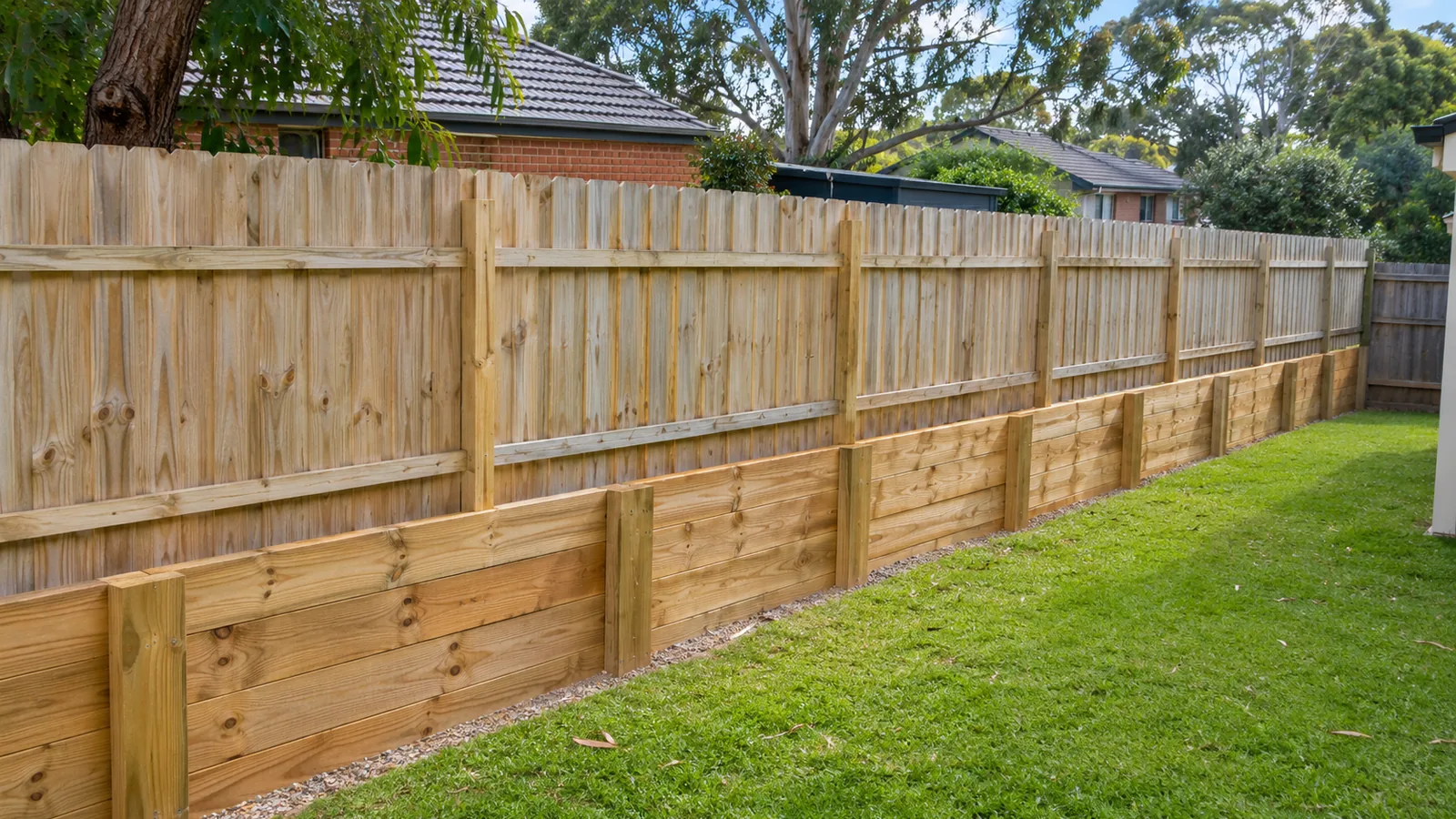
Where exactly is the boundary?
Do not rely on a fence line. A fence can sit a little off the title boundary, and a wall footing is wider than the wall face. A licensed surveyor can mark the boundary pegs, and the cost is small next to rebuilding a wall that sits on the wrong land.
The footing matters as much as the face. Posts and concrete go below ground and spread outward. Ask your builder where the footing will end up, not only where the sleepers will stand.
Does a wall near the boundary need a permit?
Victorian council guidance sets the line at 1 metre. A building permit is needed for a retaining wall that is more than 1 metre high, wherever it sits. A lower wall can still need a permit if it is linked to other building work or if it protects the adjoining property.
That second test is the boundary one. If your neighbour's yard, fence or slab relies on your wall to stay up, treat the wall as needing approval and ask a registered building surveyor. Our Cardinia Shire permits page sets out the local steps, and the builder you hire should also be checked with the Building and Plumbing Commission.
We visit, mark the cut and the footing line on site, and give you a written scope you can show your neighbour.
Book a site visit ☎ Ring (03) 9022 6418How should I raise it with my neighbour?
A short, friendly conversation does more than a formal letter. Do it before work is booked.
- Tell them what you plan, how high, how long and roughly when.
- Explain the noise, the machine and the days it will be on site.
- Ask whether they have a fence, shed or tree close to the line.
- Send a short message afterwards that records what you agreed.
Photograph their side of the boundary before work starts. If a crack appears later, you both have a record of how it looked.
Who pays for a wall on the boundary?
The answer depends on whose land the wall stands on and who needs it. If a wall sits entirely on your land and you want it, you normally carry the cost. If it sits on the line and both sides benefit, agree a split in writing first.
Whether a retaining wall counts as part of a dividing fence is a legal question, and the answer can vary with the design and where it stands. Legal Aid Victoria explains that neighbours share responsibility for a dividing fence, that a fencing notice can ask for a contribution, and that you can take the matter to the Magistrates Court if you cannot agree 30 days after serving it. Get advice for your own case before relying on any of that.
What about water and levels?
A wall changes how rain moves across the block. Poor drainage can push water into the neighbour's yard and cause a dispute even if the wall itself is fine. The drain behind the wall should lead somewhere lawful, not onto their land. Our retaining wall drainage page shows the layers, and the Victorian drainage rules page covers the approvals.
Height also matters. A taller wall near a boundary can change privacy and light. If you plan a fence on top, read the fence above a retaining wall guide before you commit to heights.
Where does excavation fit in?
The dig for a boundary wall is the riskiest step for your neighbour. A cut beside their footing can weaken it. Plan the order of work with your builder, and read our excavator hire versus operator guide if you are weighing up who should run the machine. For terraced yards near a side fence, see the terraced backyard guide, and our Officer and Cardinia Shire pages list the areas we cover.
Where can I get free help with a dispute?
The Dispute Settlement Centre of Victoria provides free dispute resolution across Victoria, and describes mediation as a free, voluntary and confidential process. Its website lists how to reach it, and it is a sensible first contact if a talk with your neighbour stalls.
What happens when you enquire?
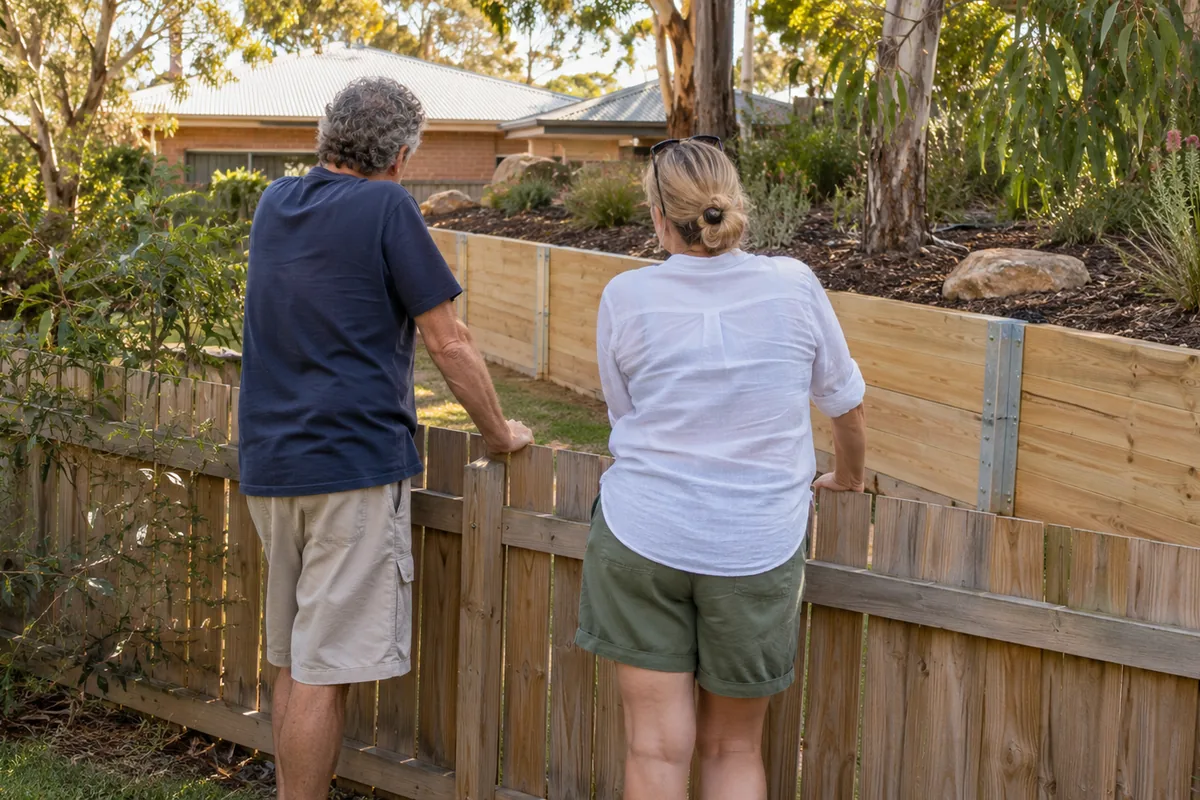
- You send the suburb, wall length and which boundary it runs along.
- We visit and mark the proposed wall and footing lines.
- You receive a written quote that names the permit and engineering steps.
Boundary wall questions
Do I need my neighbour's permission to build a retaining wall on the boundary?
There is no single rule that covers every wall. A wall wholly on your own land is your decision, but it can still affect their land by changing levels and water. A wall built on or across the boundary involves their property, so get their agreement in writing and confirm the boundary position with a licensed surveyor before any digging.
Who pays for a retaining wall on a shared boundary?
It depends on whose land the wall sits on and who needs it. Agree the split in writing before work starts. If the wall counts as part of a dividing fence, the fencing notice process may apply, and the Dispute Settlement Centre of Victoria can explain where you stand. Legal Aid Victoria says you can go to the Magistrates Court if you still cannot agree 30 days after serving a fencing notice.
Does a retaining wall under 1 metre need a permit near a neighbour?
It can. Victorian council guidance says a building permit is needed for walls more than 1 metre high, and a lower wall may still need one if it is tied to other building work or protects the adjoining property. Ask a registered building surveyor before you build.
What if my neighbour disagrees about the wall?
Start with a calm conversation and put what you agree in writing. If that fails, the Dispute Settlement Centre of Victoria offers free dispute resolution, and its website lists how to contact it. Get legal advice before any court step.
Can I dig next to my neighbour's existing wall or fence?
Take care. Digging near a footing can weaken what is above it. Tell your neighbour first, keep the cut away from their footing, and ask your builder how they will support the ground while the wall goes in.
Send the details and we will come back with a written scope that you can share with your neighbour. See the pricing page for how quotes are built.
Request your quote ☎ Call (03) 9022 6418Sources, checked 15 November 2026: Moorabool Shire Council, Build a retaining wall on private property; Legal Aid Victoria, Fences and trees; Dispute Settlement Centre of Victoria. This guide is general information and not legal advice.